Blue Cross Park
| Former Names: |
|
|---|---|
| Address: | 1 Portage Avenue East |
| Current Use: | Baseball Stadium |
| Original Use: | Baseball Stadium |
| Constructed: | 1999 |
| Other Work: | Additions 2000, 2003 |
| Architects: |
|
| Engineers: | |
| Contractors: |
|
Photographs
More Information
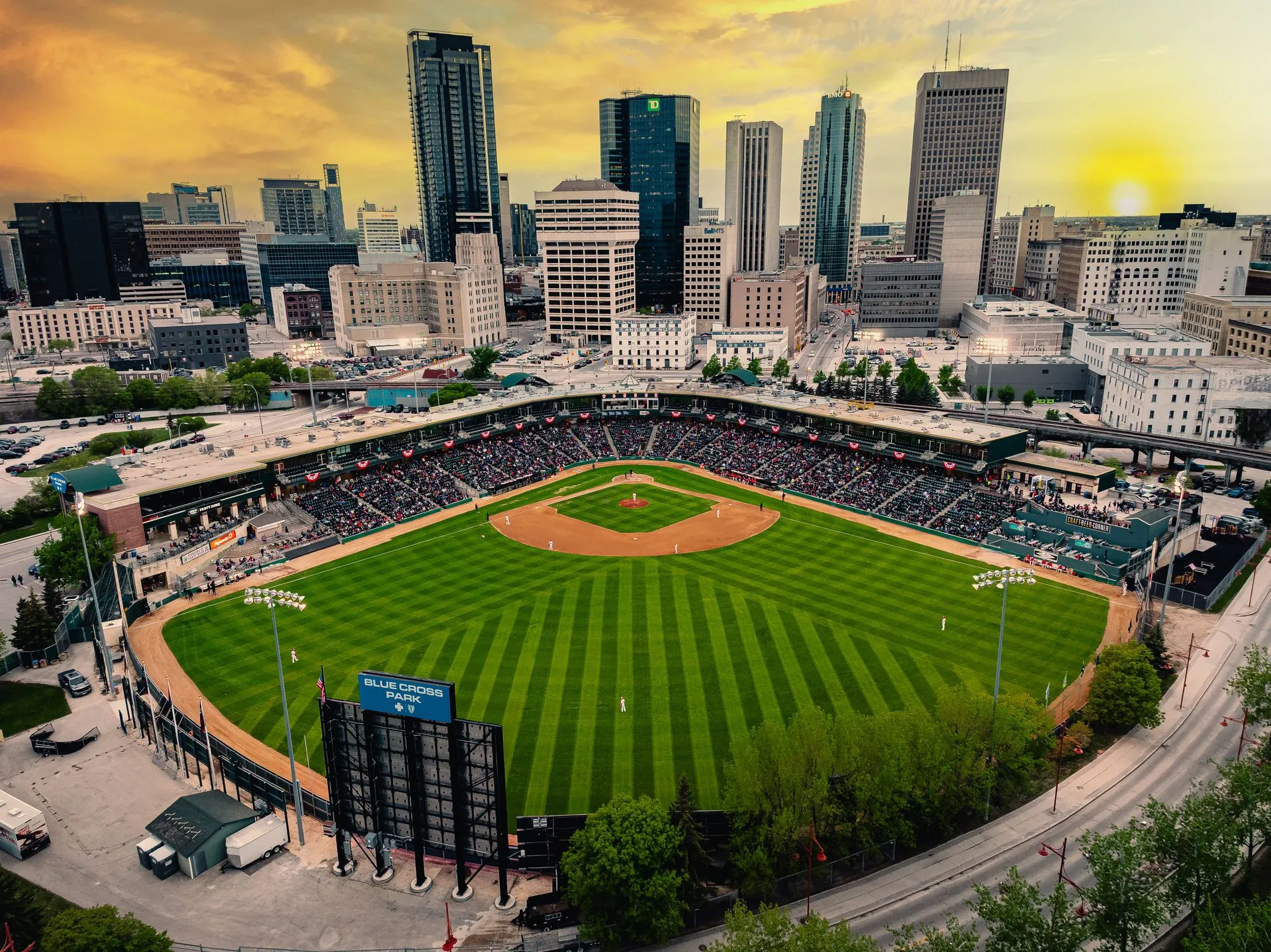
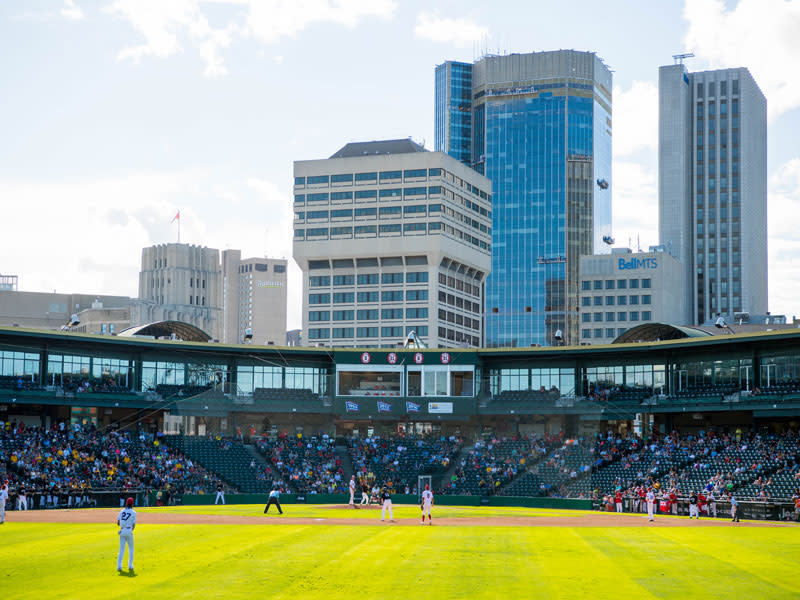
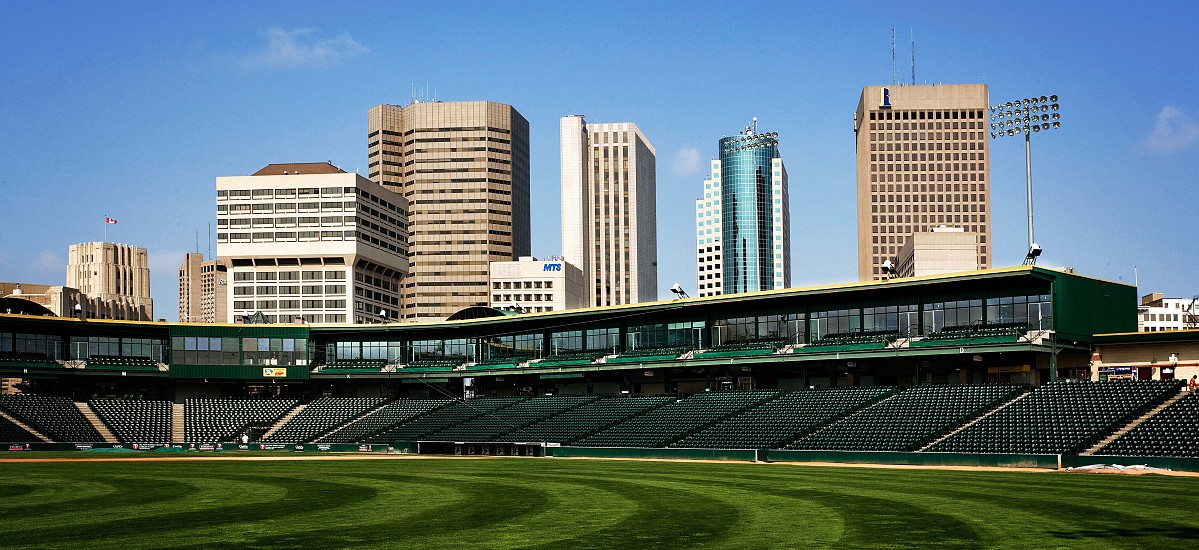
Sitting adjacent to Winnipeg’s city centre, and the nearby Exchange District and The Forks national historic sites, the baseball stadium serves as the home of the city’s professional AA baseball team, the Winnipeg Goldeyes, as well as numerous other events.
The baseball stadium was designed by Sink Combs Dethlefs, in association with local architecture firm Moody Moore. It officially opened on 24 May 1999 as the home of the Winnipeg Goldeyes baseball team. It was also the main baseball venue for the 1999 Pan American Games.
With an expansive raised mezzanine level packed with concession stands and a grandstand sloping down to the playing field, the stadium helped pioneer the ballpark format currently in vogue in the minor leagues. The facility includes a variety of full-service concessions and amenities, skyboxes and a large gift shop.
Engineering requirements for the facility included extra power provisions and capacity for concerts and other special events. All lighting, power and systems for this outdoor facility were designed to AAA baseball standards.
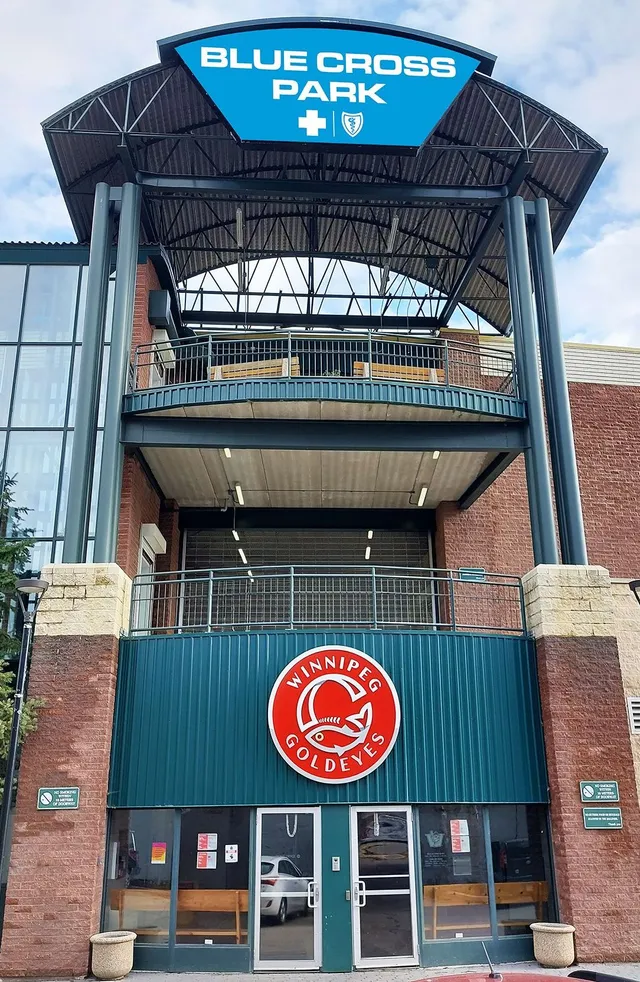
The ballpark’s original naming rights were held by Winnipeg-based CanWest Global Communications, and the venue was known as CanWest Global Park. Following the company’s 2008 rebrand, the name was shortened to Canwest Park. In 2010, Shaw Communications acquired the naming rights after purchasing Canwest’s broadcasting assets, and the stadium was renamed Shaw Park for the 2011 season. The Shaw name remained in use until the company’s acquisition by Rogers Communications. In November 2023, the ballpark announced a 10-year naming rights partnership with Manitoba Blue Cross and was officially renamed Blue Cross Park.
Design Characteristics
| Materials: | brick, Tyndall stone |
|---|
- Brick and Tyndall limestone construction
- Natural grass surface with tradional dirt infield.
- Originally built to a capacity of 6140, the stadium now seats 7461