Brookside Cemetery
| Address: | 3001 Notre Dame Avenue |
|---|---|
| Constructed: | 1878 |
| Architects: |
|
| Landscape Architects: |
|
Photographs
More Information
Established in 1878, Brookside Cemetery is among the oldest and largest examples of the garden cemetery tradition in Western Canada. The cemetery, which is approximately 70 hectares in size, illustrates many characteristics of the Euro-American garden cemetery style, including winding roads, irregularly shaped islets, a waterway, and park-like landscape design. It also features a range of plantings and assorted funerary monuments of artistic interest.
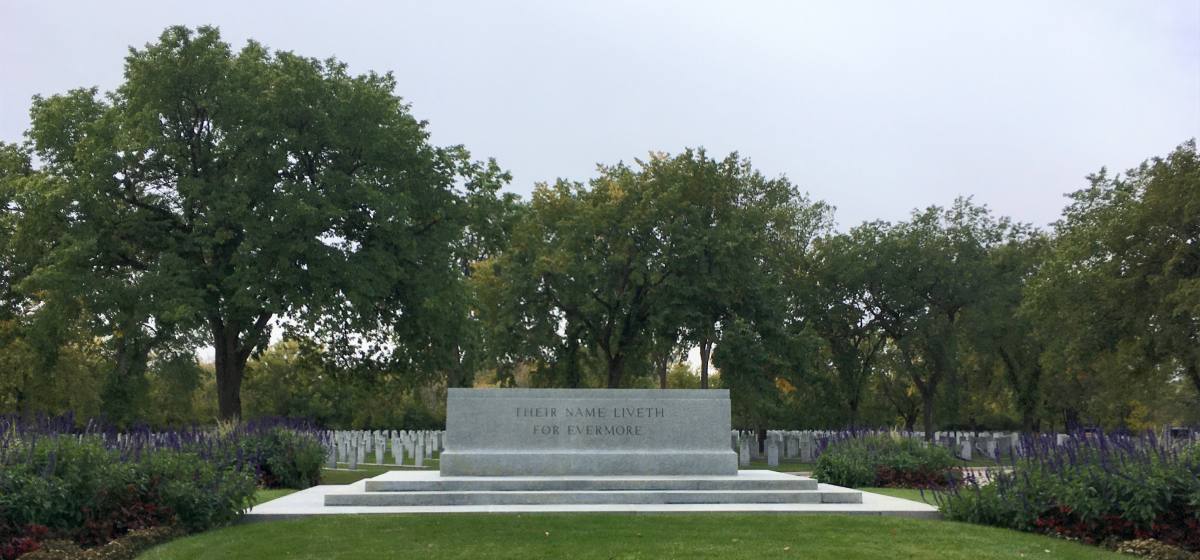
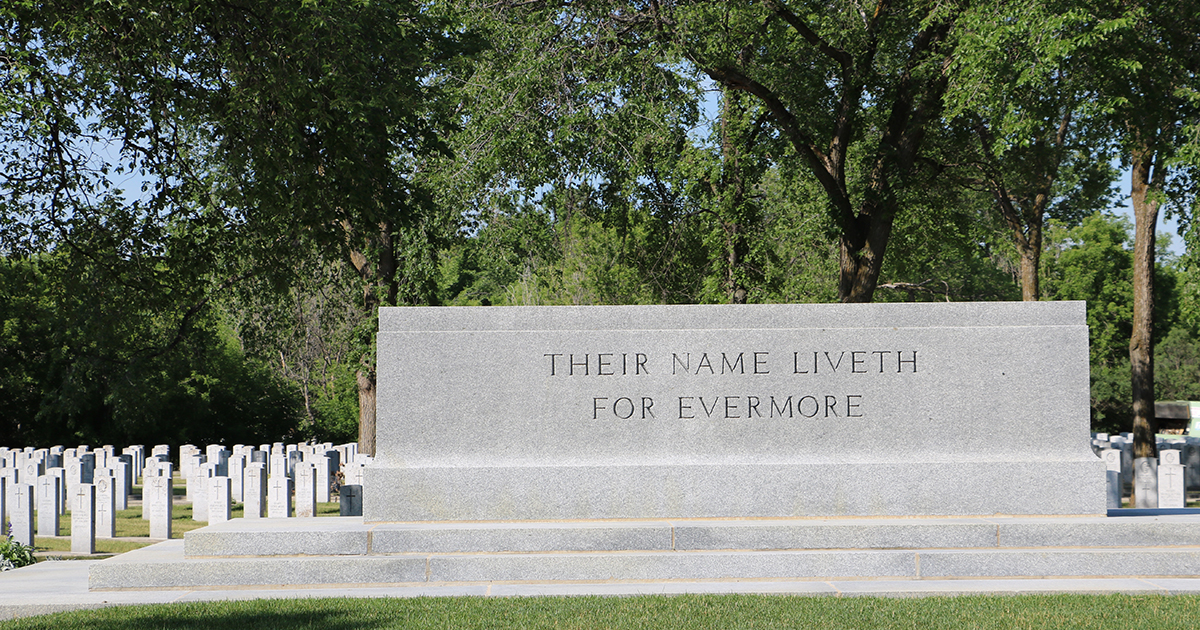
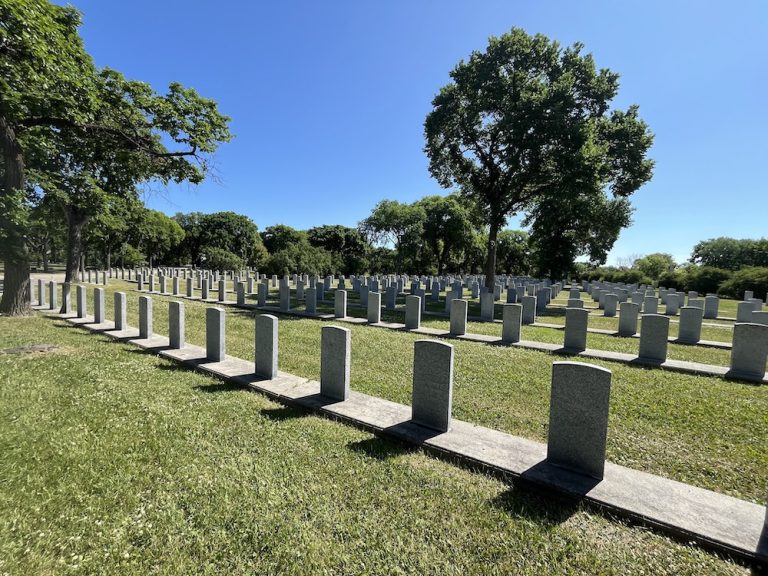
In the early 20th century, the northern portion of Brookside Cemetery came In the early 20th century, the northern portion of Brookside Cemetery came to serve as a military Field of Honour. Particularly significant is the First World War Graves Commission (CWGC). This area exemplifies the efforts of local service groups to honour fallen soldiers. The heart of the Field of Honour is an islet known as the “Tear Drop,” wherein graves are arrayed in the form of a tear. In 1922, a CWGC Cross of Sacrifice was installed at the centre of the Tear Drop. Outside of this section, CWGC’s standard axial layout was adopted, and in 1960, a CWGC Stone of Remembrance was added. Designed by British architect Sir Edward Lutyens, it is the only one of its kind in the country. The Stone commemorates all Commonwealth sailors, soldiers and airmen buried in Canada. Its placement was chosen for the symbolic fact of the cemetery’s location near the centre of the country.
A number of other important monuments and historic elements are located throughout Brookside Cemetery. These include early 20th-century Manitoba limestone and wrought-iron entry gates, a Korean Veterans Cairn, a Hong Kong Veterans Cairn, a monument to the victims of the 1947 Dugald train disaster, the Winnipeg Fire Fighters Memorial Monument, and the University of Manitoba Medical Monument.
Recognition & Awards
National Historic Site of Canada, 2023.
Design Characteristics
| Neighbourhood: | St. James-Assiniboia |
|---|
- Original design by architect and surveyor, Thomas Harbridge Parr between 1877 and 1883
- Alteration and further landscape design between 1899 and 1904 by David D England, the first the first Superintendent of Winnipeg’s Public Parks Board. Mr England altered and enlarged Mr Parr’s original plans and directed the planting of thousands of trees at Brookside.
Sources
Jeffrey Thorsteinson, Architectural Historian, Parks Canada.
Parks Canada, National historic site designations.
https://parks.canada.ca/culture/designation/lieu-site/brookside