Wildwood Park
| Constructed: | 1946 |
|---|---|
| Architects: |
|
Photographs
More Information
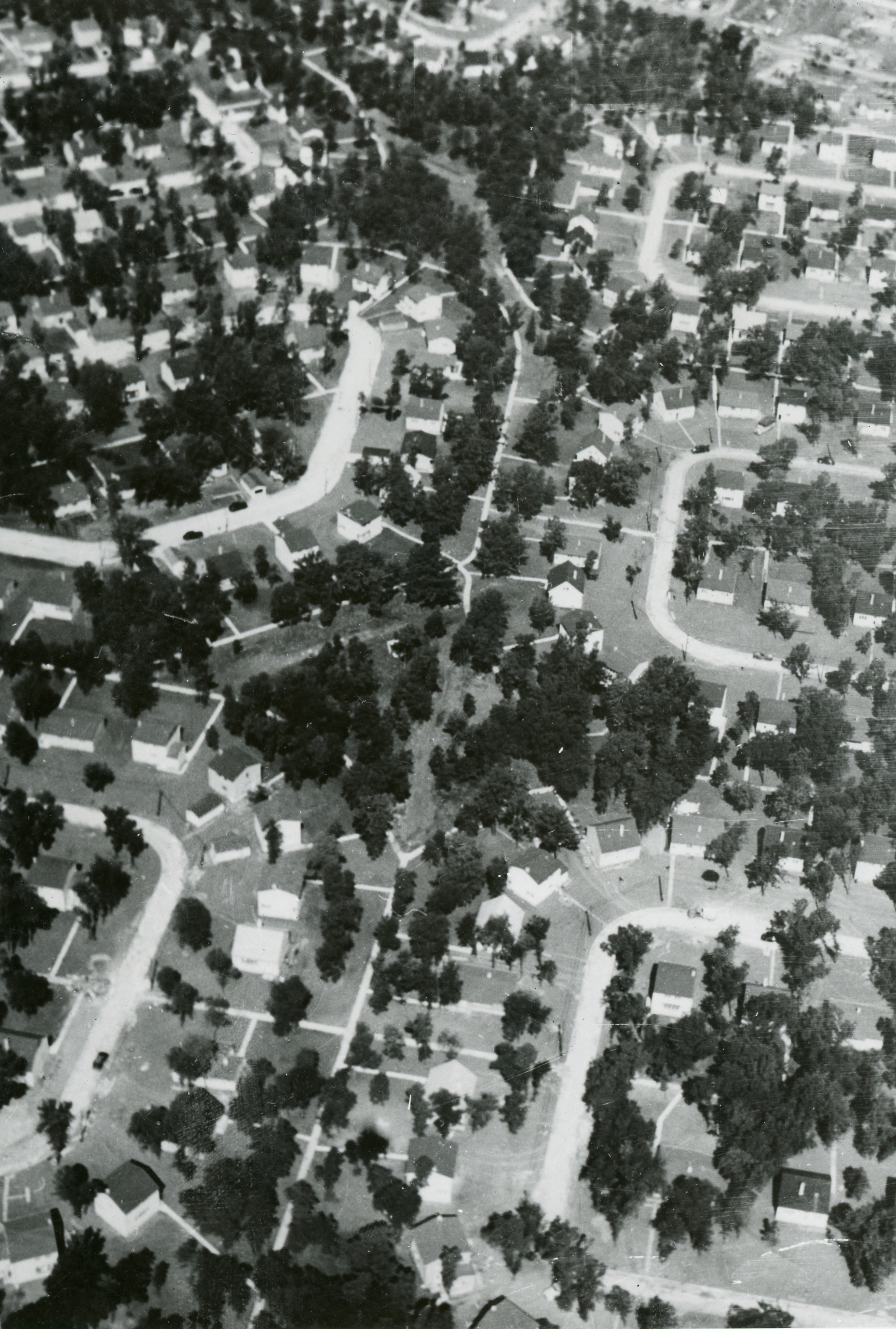
Wildwood Park is a neighborhood that resembles few others. Tucked into a peninsular point of land hugged on three sides by the Red River, this residential district stands apart from the rest of the city in a number of ways. Among the most prominent is the uncommon arrangement of its lots. Rather than fronting onto streets, the homes face park-like spaces traversed by sidewalks. Vehicular access is gained via ten laneways. The scheme, somewhat utopian in ambition, is the remarkable consequence of a twentieth century inclination toward blending home and nature. This was a trend that began to deeply affect suburban building in the nineteenth century. The specific model for Wildwood Park was Radburn, New Jersey, an area developed according to similar principles in the late 1920s and 1930s. One of the Radburn-model period accounts stated that this orientation and plan “represents the first scientific effort that has ever been made to establish a community exclusively to minimize the danger of automobile accidents. Yet there were other things to consider too… It was the desire of the builders to create not only a [safe] community” but one “of beauty in appearance and the utmost of modern efficiency.” (The American Architect, January 1930.)
The connection between the two arose from somewhat circumstantial events. Hubert J. Bird, of the Western Canadian development and construction firm Bird Construction, is reported to have flown over Radburn while visiting New York, thereby gaining the inspiration for the area he was developing in Winnipeg. Aiding Bird in the creation of this new district was the passage of the federal National Housing Act, passed to speed the construction of homes in a booming post-war milieu. To build Wildwood Park, Bird purchased 74.7 acres of land from the Rural Municipality of Fort Garry in 1945. To design the area he hired the pioneering local architectural firm Green Blankstein and Russell. Federal housing authorities said of the plans created: “The result should be extremely interesting, attractive and utilitarian,” while recommending the incorporation of the bays found now, versus the initially suggested hammerhead cul-de-sac lanes. During the building process Bird spearheaded several new construction methods, including elements modelled on assembly-line techniques. Accounts indicate that the adoption of pre-fabrication practices led to the assembly of three houses per day. At the same time, effort was made to conserve area forests.
A number of the area’s homes were built and inhabited by architects and architecture professors, many in a modernist idiom which had only just started gaining traction in Canada during the early post-war years.
Design Characteristics
| Style: | Modernist |
|---|---|
| Developer: |
|
| Neighbourhood: | Wildwood |